The Fibre You Haven’t Met Yet.

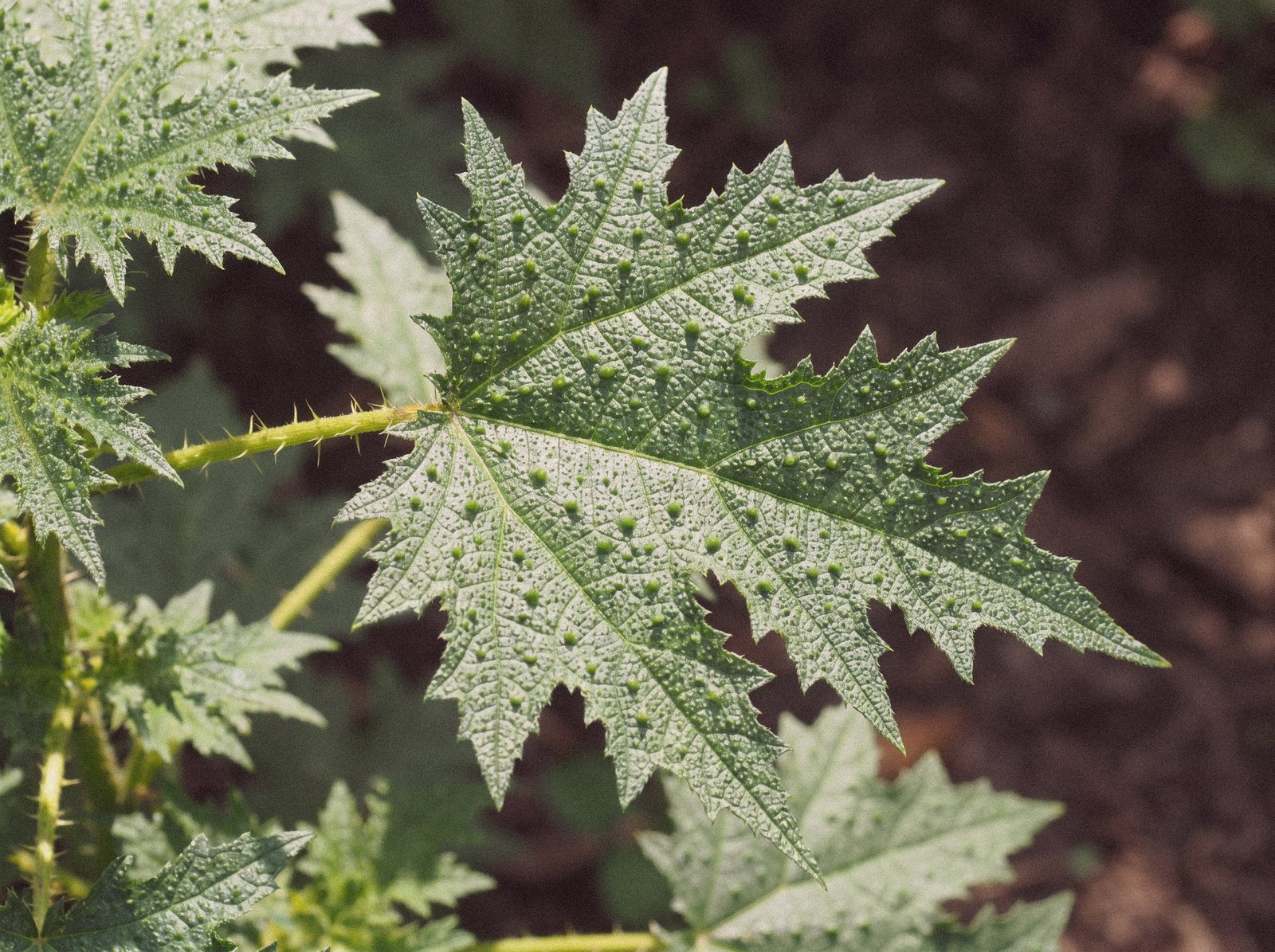
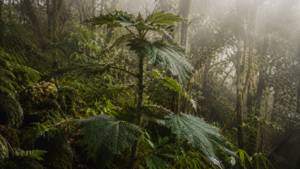
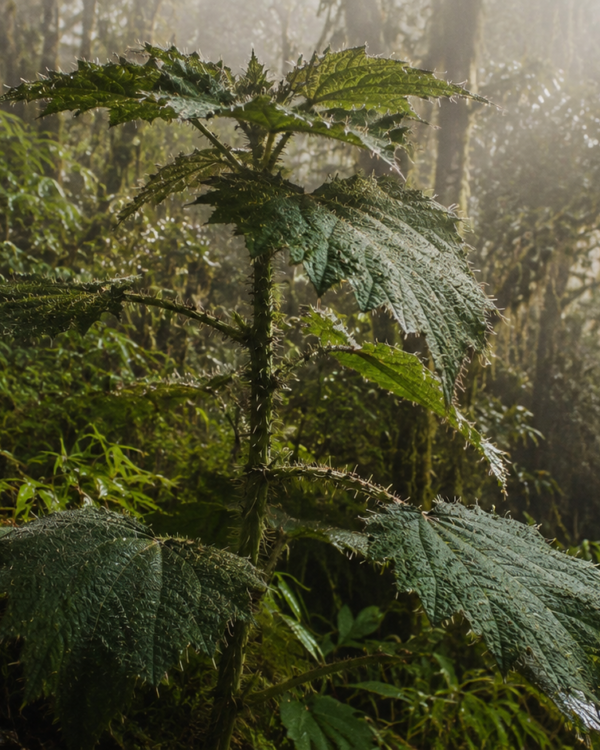
Himalayan nettle fibre is obtained from the stems of a plant commonly identified as Girardinia diversifolia, also known as Himalayan giant nettle.
Unlike conventional cotton, which produces fibres around its seeds, Himalayan nettle provides usable textile fibre from its stalk.
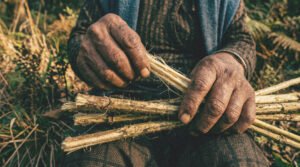
The fibre is extracted, prepared and turned into yarn before it can become a finished textile or garment.
In Nepal, Allo has traditionally been used to create a variety of practical items, including clothing, bags, ropes and other textiles.
What is changing is the way it can be interpreted through contemporary design.
A Material Shaped by Its Origins
Its story is not one of recent invention. It is a material with an established place in the craft traditions of Nepal.
Allo begins in the landscapes of Nepal, where the plant grows under the influence of local geography, climate and seasonal conditions.
But the plant alone does not make the textile.
Between the growing stalk and the finished garment lies a series of skilled processes. Fibre must be separated, prepared and transformed into yarn suitable for making.
The people involved bring knowledge that cannot be explained by the material’s natural origin alone.
Understanding Himalayan nettle therefore means looking at two things together: what the plant provides and what human skill makes possible.
A Material Shaped by Its Origins
Allo begins in the landscapes of Nepal, where the plant grows under the influence of local geography, climate and seasonal conditions.
But the plant alone does not make the textile.
Between the growing stalk and the finished garment lies a series of skilled processes. Fibre must be separated, prepared and transformed into yarn suitable for making.
The people involved bring knowledge that cannot be explained by the material’s natural origin alone.
Understanding Himalayan nettle therefore means looking at two things together: what the plant provides and what human skill makes possible.
From Plant to Fibre, From Fibre to Form
The journey of Allo involves several distinct stages.
Gathering the plant
The process begins with the collection of suitable nettle stems. Traditional harvesting practices vary by community and location.
Preparing the fibre
The usable fibre is separated from the stalk and processed. Traditional methods can involve boiling, washing, beating and drying, depending on the practices used.
Creating the yarn
Prepared fibres are transformed into yarn. This stage determines many of the characteristics that influence how the material can subsequently be worked.
Making the garment
Once yarn is ready, it can be used in different textile constructions.
At Loomaama, hand knitting gives Himalayan nettle a place in contemporary silhouettes. Pattern, proportion, tension and finishing work together to determine the character of each piece.
The journey is not simply from plant to product. It is a progression through different kinds of knowledge.
What Does Himalayan Nettle Fabric Feel Like?
One of the most distinctive qualities of Himalayan nettle is its texture.
The character of an Allo textile depends on how the fibre has been prepared, the yarn produced from it and the construction of the finished piece.
An open-knit garment may have a visibly airy structure, while a denser knit offers a different surface and drape.
Its appearance may contain subtle irregularities associated with natural fibre and handwork.
These characteristics are not identical in every garment.
The best way to understand a Himalayan nettle piece is to consider its actual knit pattern, dimensions, weight and finishing, rather than assuming that every garment made from the fibre will feel the same.
Himalayan Nettle and the Art of Hand Knitting
A fibre does not determine a garment’s final expression on its own.
The maker does.
In hand knitting, each row is shaped through repeated decisions. Tension influences structure. Pattern changes openness. Proportion determines how the garment sits against the body.
A shawl, a tank top and a cardigan can begin with the same type of fibre yet become entirely different expressions of it.
At Loomaama, this relationship between material and hand is central to the design.
The aim is not to remove every indication of human making. It is to allow the character of the fibre and the judgement of the maker to remain visible while maintaining a considered finish.
Is Himalayan Nettle a Sustainable Fabric?
Himalayan nettle is a plant-derived natural fibre, but natural origin alone does not establish that a finished textile is environmentally sustainable.
The environmental impact of a garment also depends on harvesting practices, fibre processing, colouring, manufacturing, transportation and eventual disposal.
Responsible sourcing requires attention to these details.
For Himalayan nettle, questions about the management of wild plants and the long-term availability of the resource are especially important.
Rather than relying on broad environmental promises, a more useful approach is to understand the actual material, the production methods and the evidence behind any sustainability claim.
Why Himalayan Nettle Belongs in a Contemporary Wardrobe
Clothing is often discussed through trends, colours and seasonal silhouettes.
Yet the material itself can bring another dimension to the way we dress.
Himalayan nettle introduces a texture that can become part of a garment’s identity, rather than something hidden beneath a decorative finish.
Through hand knitting, it can take on open structures, close patterns, layered forms and distinctive proportions.
For Loomaama, this is where the material becomes particularly interesting.
Allo does not need to imitate another fibre to find its place. Its appeal lies in understanding what it can become on its own terms.
The Beginning of Loomaama
Before Loomaama, there was Allo.
The fibre existed. The knowledge existed. The people who understood its possibilities were already working with it.
Loomaama begins with respect for that history and an interest in bringing natural materials and skilled making into contemporary clothing.
Our first collection places Himalayan nettle at its centre.
Each piece is an exploration of material, form and the individual decisions involved in making something by hand.
We believe that understanding a garment should begin before the moment it is worn.
With the fibre. With its origins. With the hands that give it form.
Because what makes a garment worth discovering is not always visible at first glance.
Sometimes, it begins with a fibre you haven’t met yet.