
From Fiber to Fabric: The Journey of a Garment
Every Loomaama piece passes through many hands and takes weeks to complete. This is what that process looks like, from the first harvest to the final stitch.
How a Loomaama Garment is Made
From harvest to finished piece, a single Loomaama garment passes through 8-12 artisans and takes 3-6 weeks to complete. Here's how it happens.
Harvest
Processing
Spinning
Dyeing (if applicable)
Warping
Weaving
Finishing
Quality Check
The First Act of Every Garment
Where It All Begins
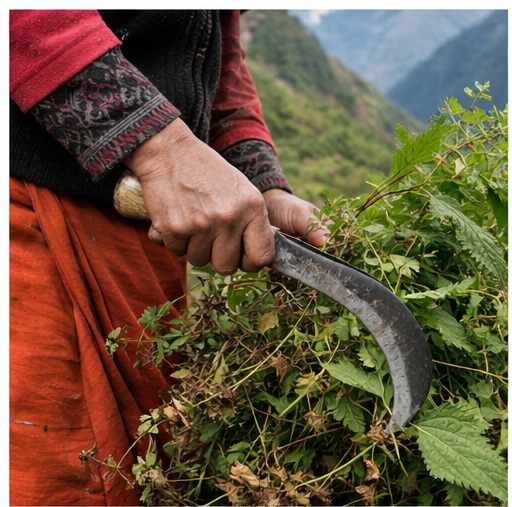
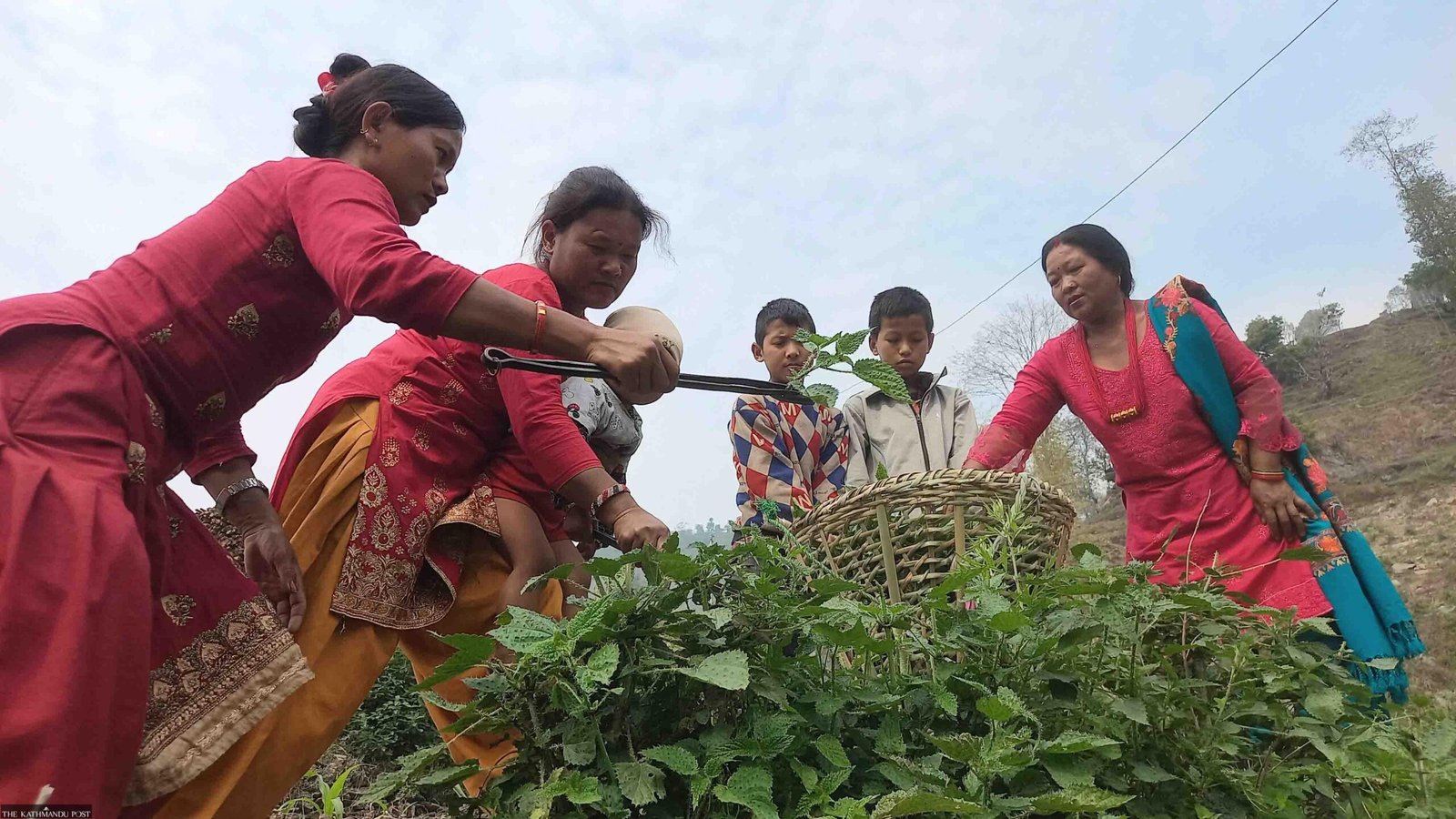
The forest gives first.Nettle is harvested by hand in late summer, when the stalks are tall and the fiber is at its strongest.

The Quiet Work of Preparation
The transformation begins here
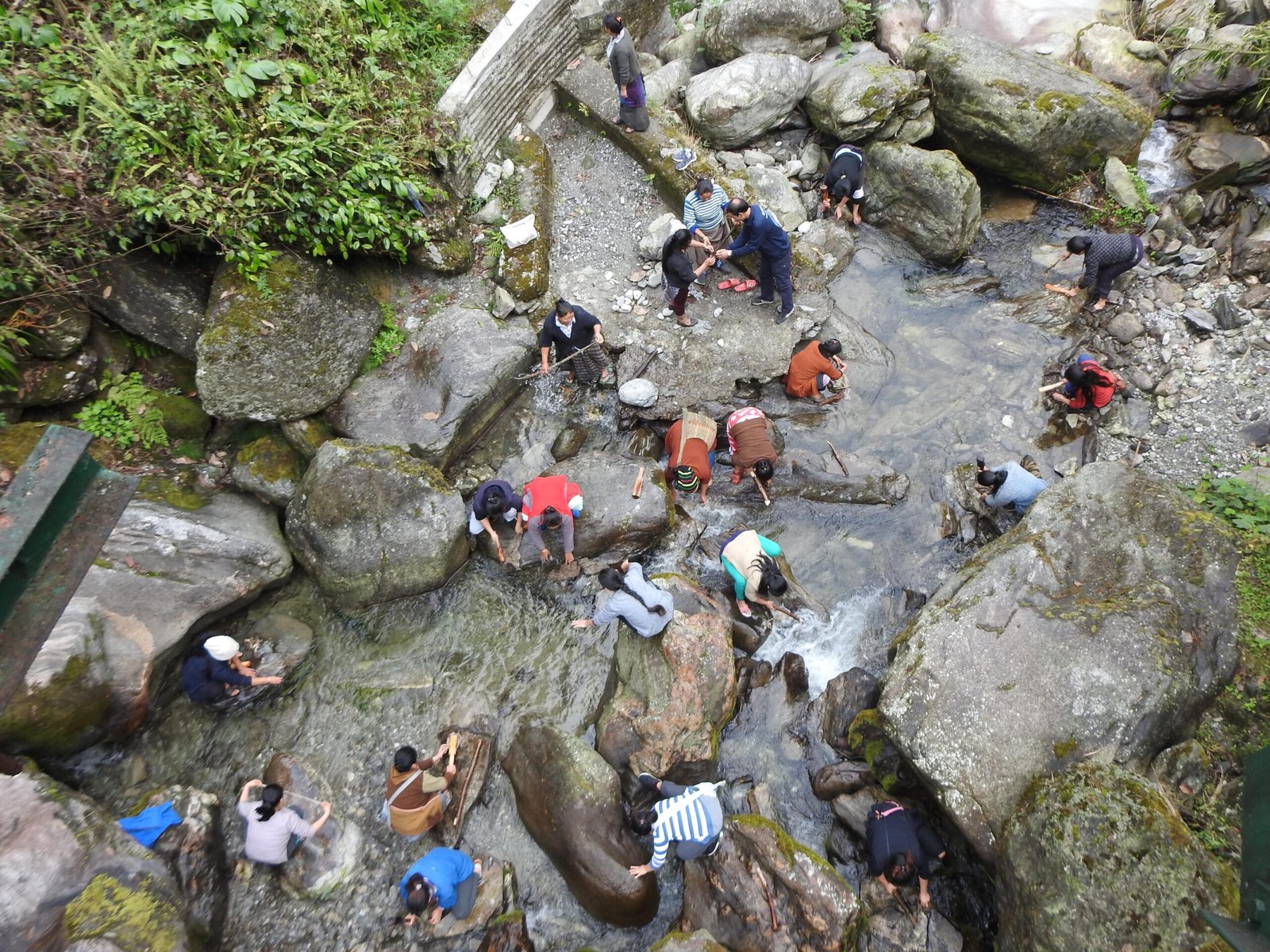
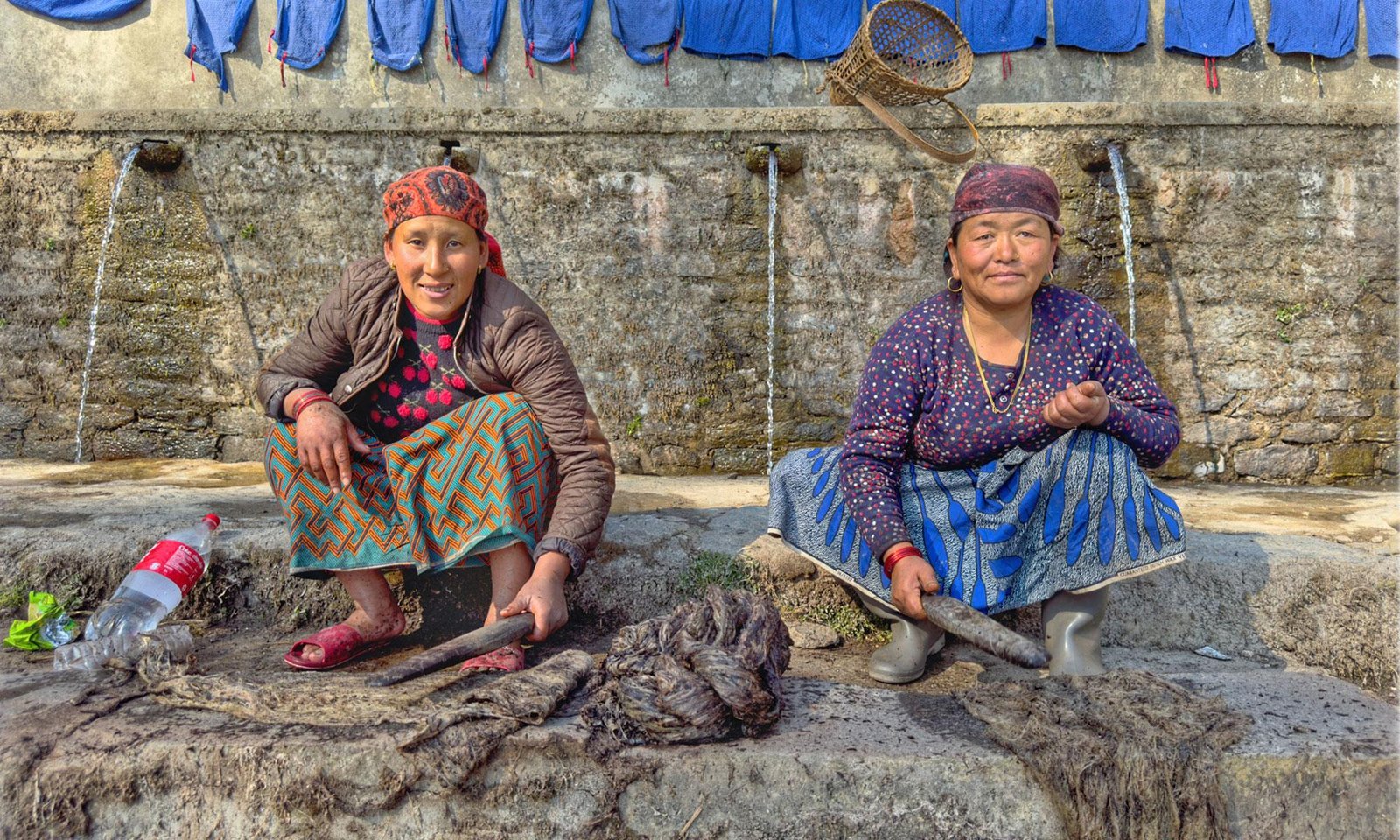
Raw nettle and hemp stalks are retted in water to soften the outer layer, then dried and beaten by hand to separate the fiber from the woody core.
It is slow work. It takes days. And it is the foundation on which everything else is built on.
Spinning Fiber into Yarn
Patience Twisted Into Thread
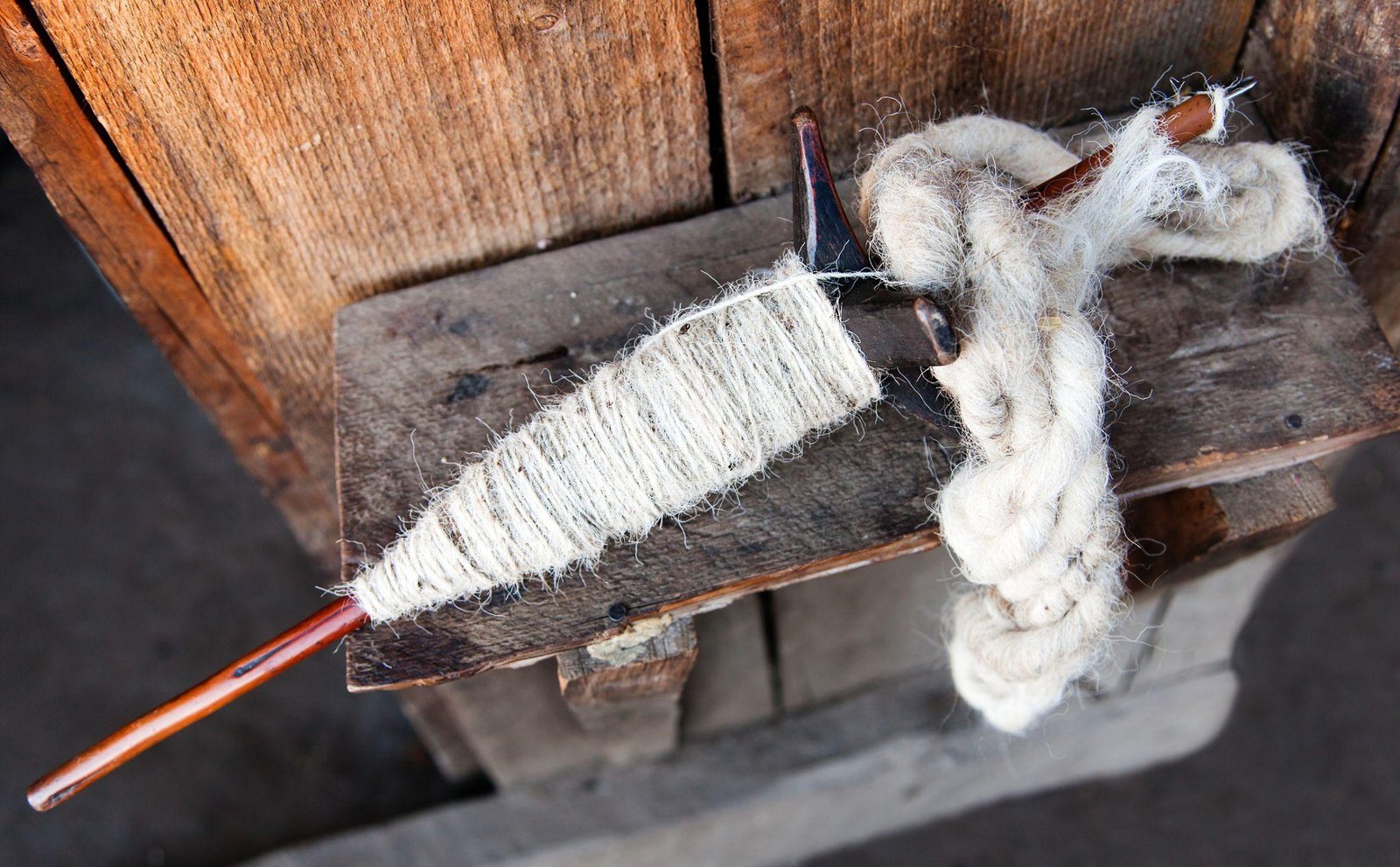
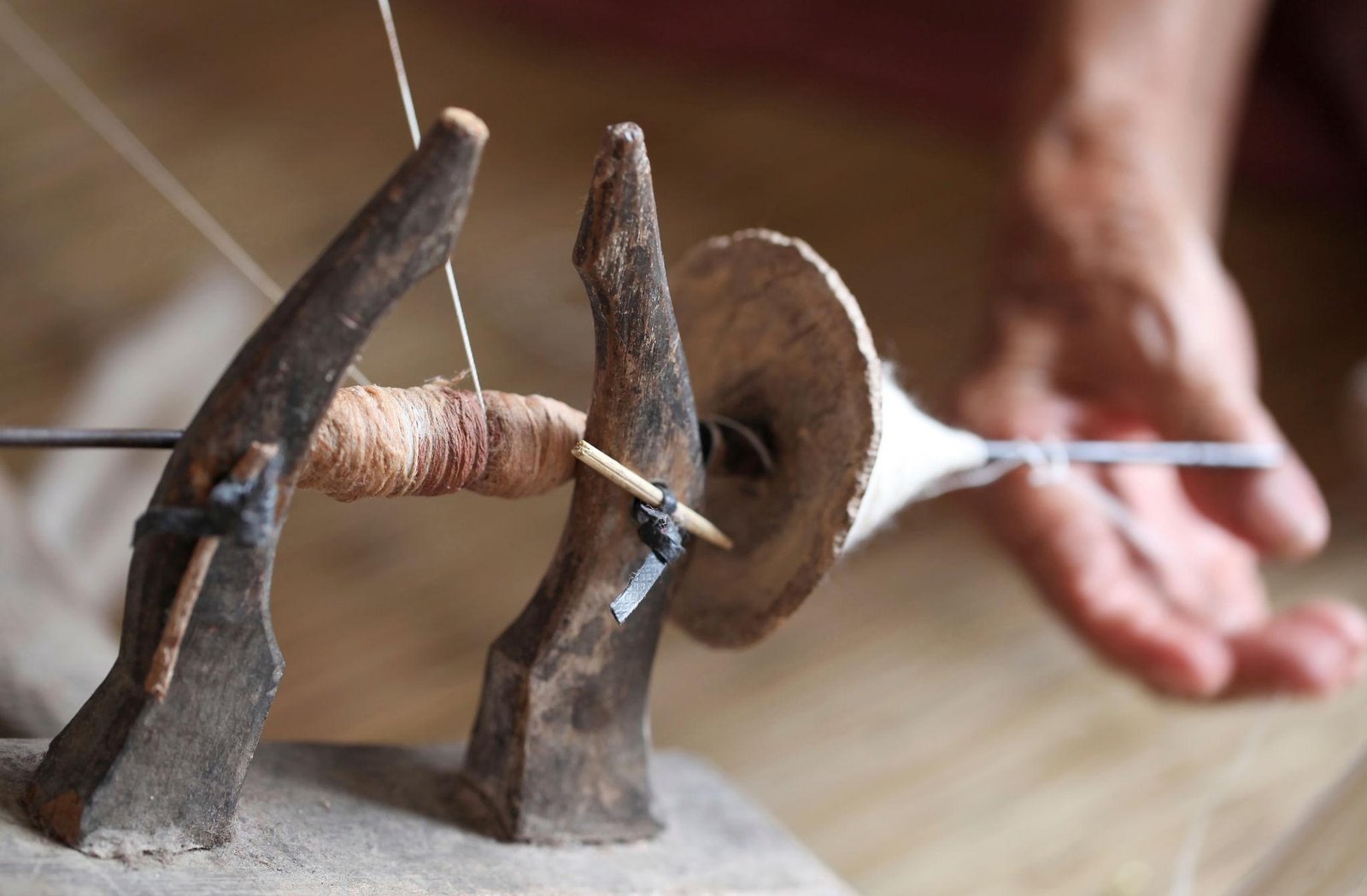
Once processed, the fiber is ready for the spinner.Using a generationally trusted spindle or spinning wheel (charka), skilled hands twist raw fiber into yarn, maintaining consistent tension and thickness with every turn. It is a skill that takes years to master and cannot be rushed. A single skein of yarn can take four to six hours to spin.
Natural Dyeing
Natural Colour. Natural Process.
Most Loomaama garments are left exactly as nature made them. Undyed. Unbleached. Honest.
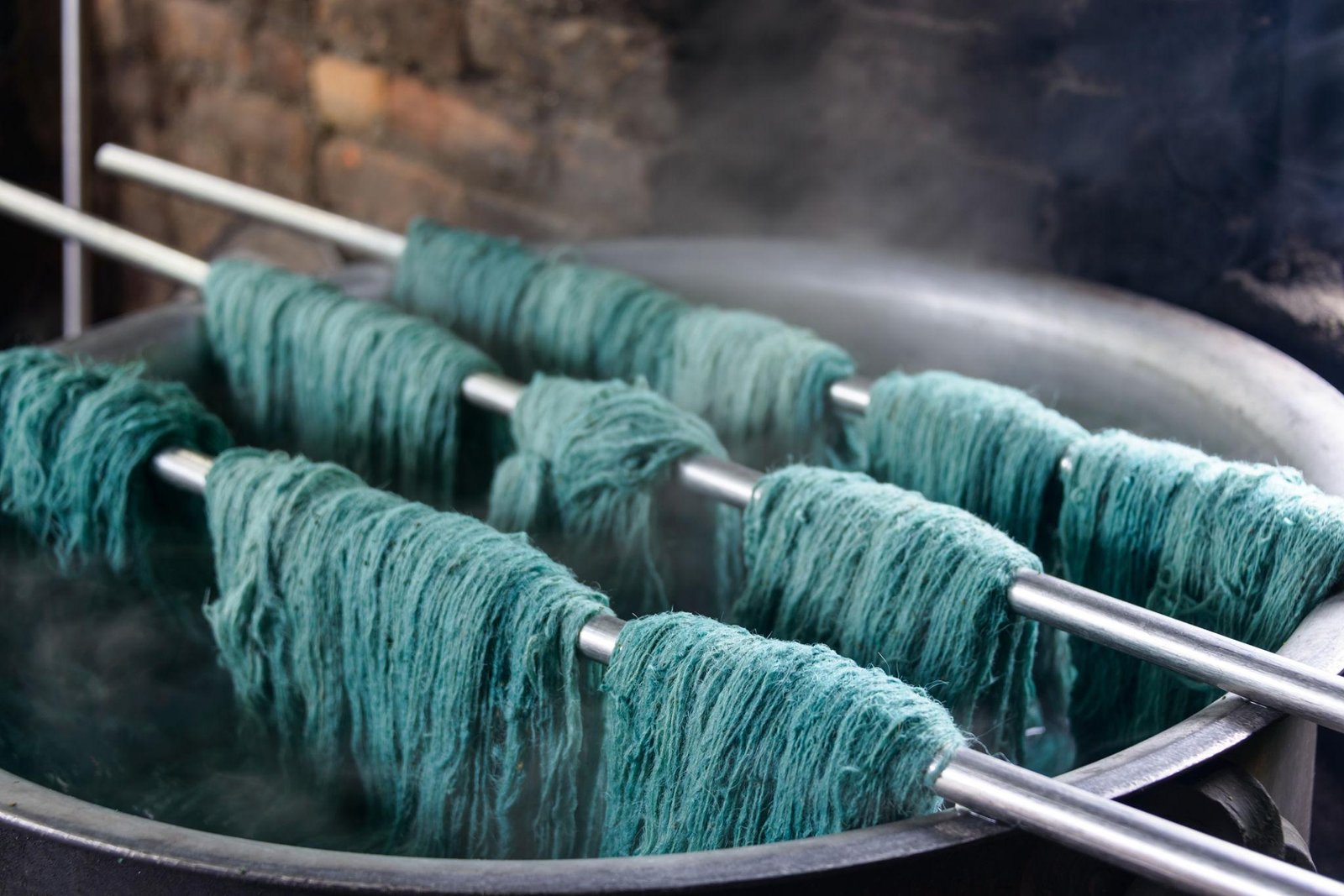
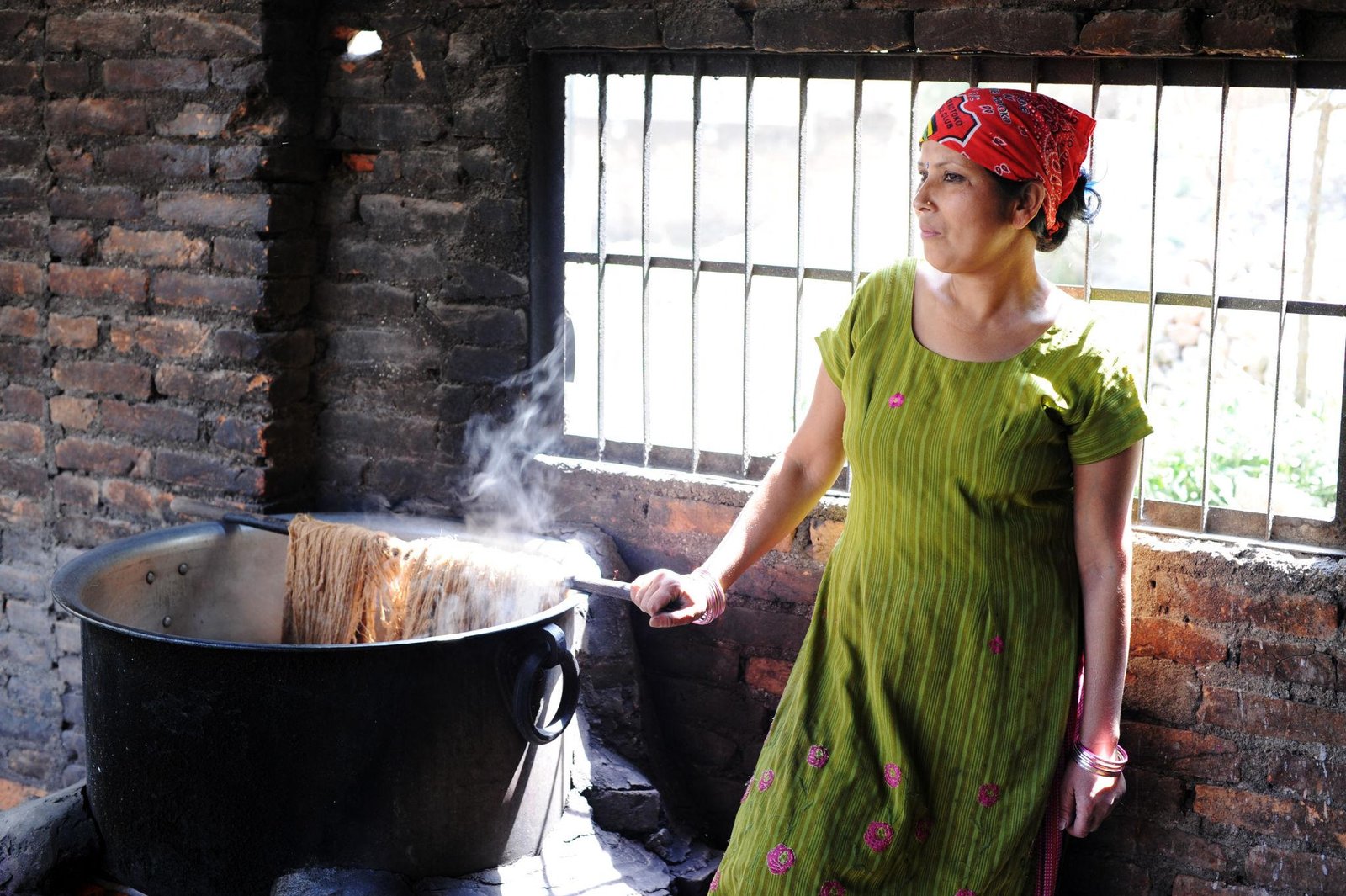
When colour is called for, we turn to the earth. Indigo for blue. Madder root for red. Turmeric for yellow. No synthetic interference. No chemical shortcuts. Natural dyeing is beautifully unpredictable. Each batch varies slightly, each piece emerges a little different. Not a flaw. A signature.
Preparing the Loom
Setting Up to Weave
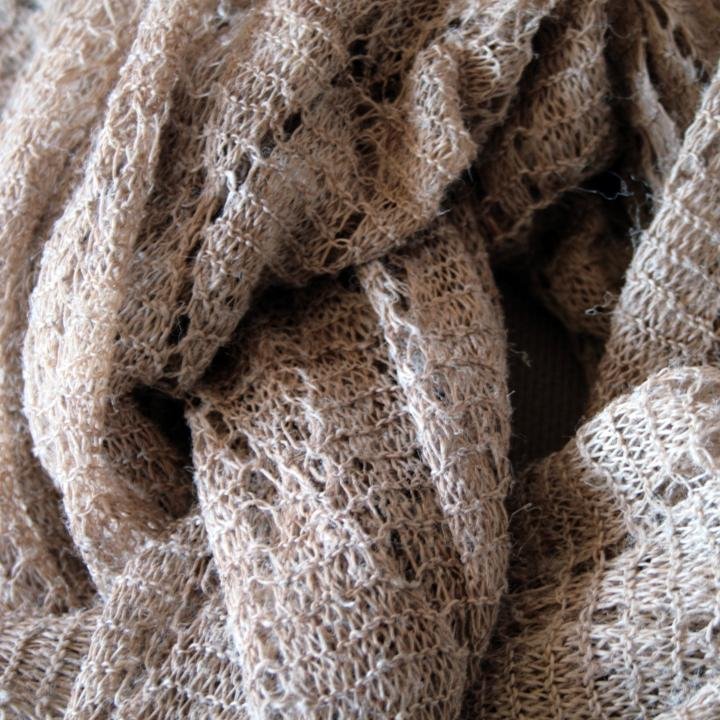
Before weaving can begin, the loom must be warped. Vertical threads are stretched, measured, and secured with care. This step determines the width, length, and structure of everything that follows. Warping a loom for a single garment can take a full day.
The Weaving Begins
The Heart of the Process
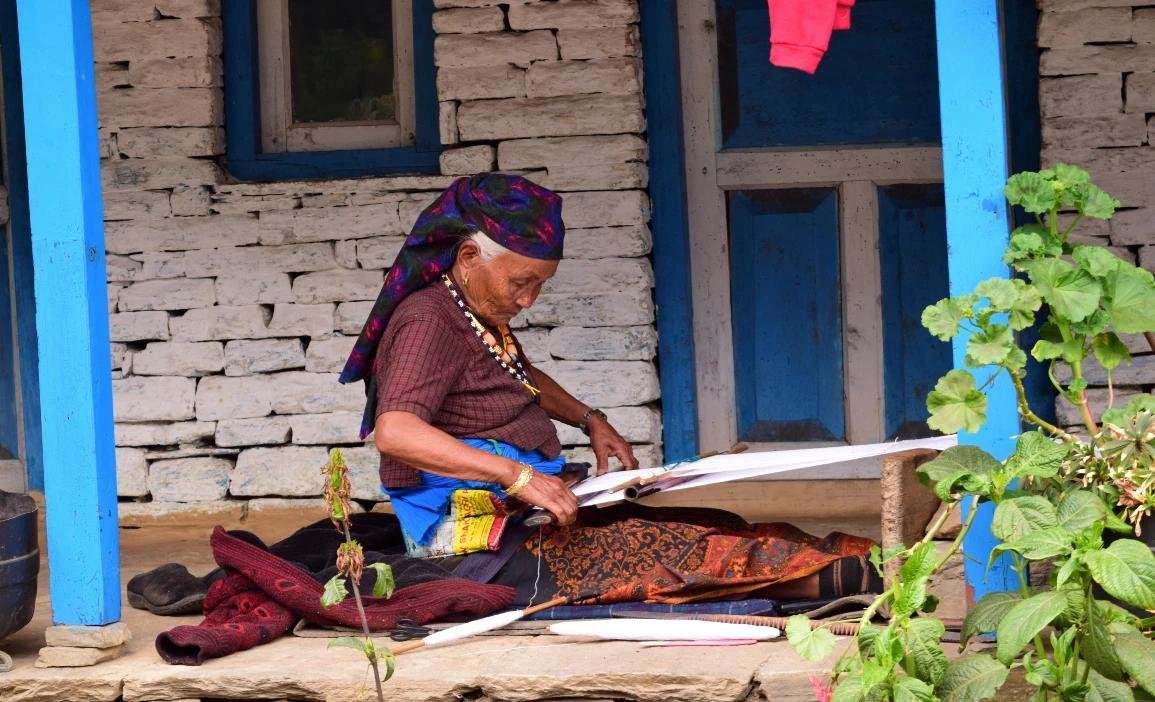
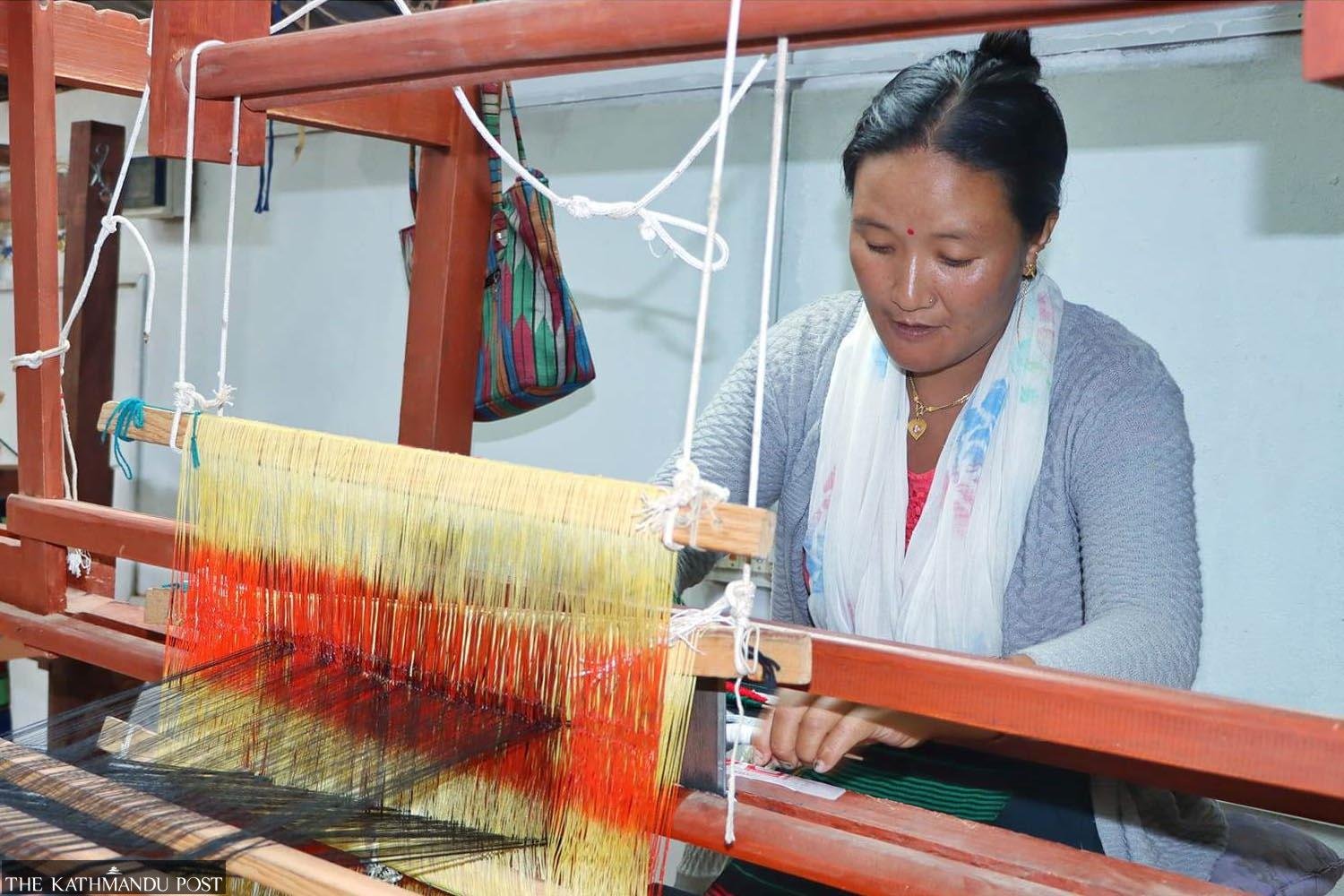
The weaver passes horizontal threads (weft) through the warp, one by one, building fabric with patience and skill. Every row placed by hand. Every pattern held in memory.
A skilled weaver produces one to two meters a day. Slow, deliberate work. And it shows.
The Finishing Touch
Taking Shape
Once the fabric is woven, it is cut and shaped into its final form. Every stitch is done by hand or on a simple treadle machine. Hems are carefully finished. Seams are reinforced by hand. Each detail is considered. Each piece is inspected before it leaves.
Nothing is rushed at this stage. The garment is nearly complete. It deserves that care.
The Final Standard
One Last Set of Eyes.
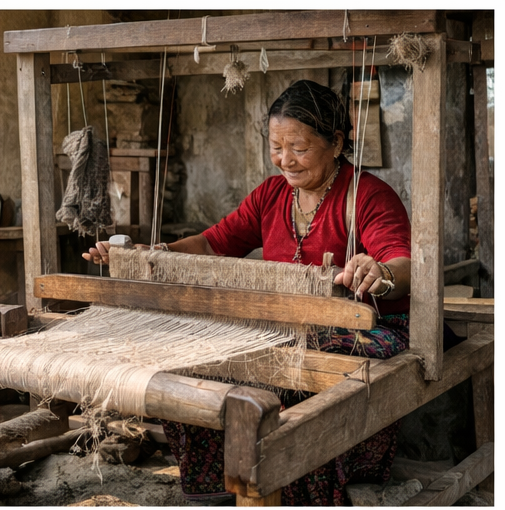
Before a garment leaves Nepal, it passes through one final inspection. Stitching checked. Fabric tested. Every finish is examined by hand.
Only pieces that meet Loomaama standards leave. No exceptions. Each garment is then labeled with the artisan’s name. Not a formality. But a signature.
What Machines Can't Replicate
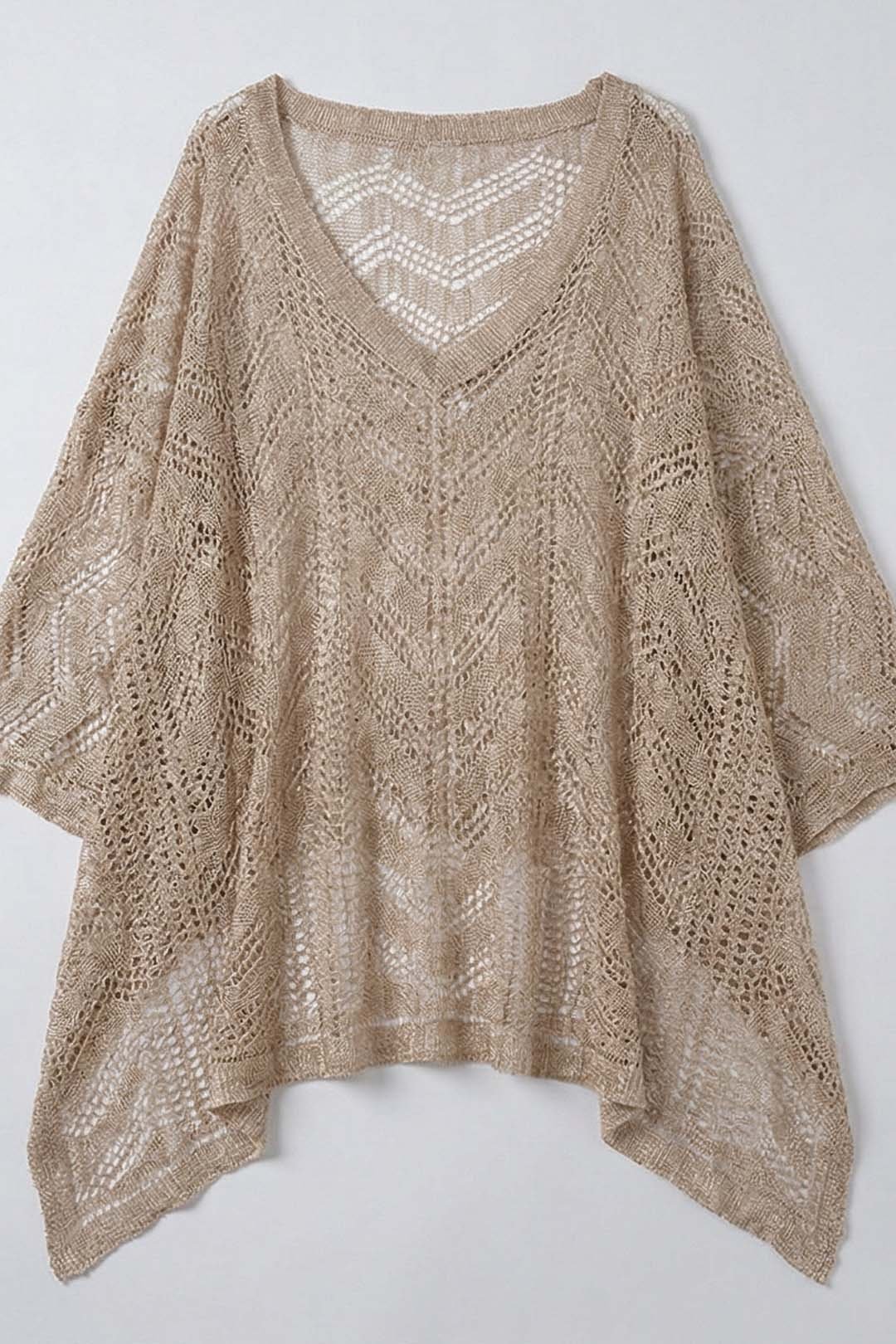
Handmade fabric carries something machine-made never will. Slight variations in thickness, texture, and tension. A drape that moves differently. A surface that tells the truth about how it was made.
These are not flaws. They are fingerprints.
Machine-made fabric is uniform, predictable, and silent. Loomaama fabric breathes, ages beautifully, and carries the quiet presence of the person who made it.
That is the difference. And once you feel it, you will not go back.
Why It Takes Weeks, Not Hours
A single Loomaama garment represents 40 to 60 hours of skilled human labor. Not because the process is inefficient. Because it cannot be shortened without losing what makes it worth wearing.
Fast fashion prioritises speed. We prioritise the garment. The result is clothing that does not fall apart after a season, because it was meant to stay longer.
Average time from fiber to finished garment
3-6 Weeks
The Tools of the Trade
Loomaama artisans work with hand spindles, wooden looms, and simple sewing machines. Tools that have been passed down through generations alongside the skill. No industrial machinery. No automation. No shortcuts.These tools are not outdated. They are precise. And in the right hands, they produce something no modern machine has ever been able to match.
Sickle:
Used to harvest mature nettle plants from forests. The curved blade helps cut thick stems quickly and safely.
Water & stones:
Bundles of nettle are soaked in water and held down with stones. This natural process loosens the fibers from the plant without chemicals.
Scraping tools:
Simple wooden or metal tools are used to scrape off the outer bark, separating usable fibers from the stem.
Combs:
Fibers are combed and aligned, removing dirt and short strands to prepare for smooth spinning.
Charkha:
Clean fibers are twisted into yarn using a drop spindle or spinning wheel (charkha).
Weaving:
The yarn is woven into cloth using handlooms or backstrap looms, completing the fabric-making process.
Ready to Bring the Wild Home?
Follow our journal for behind-the-scenes stories, artisan profiles, and deep dives into traditional craft.
Read the Journal